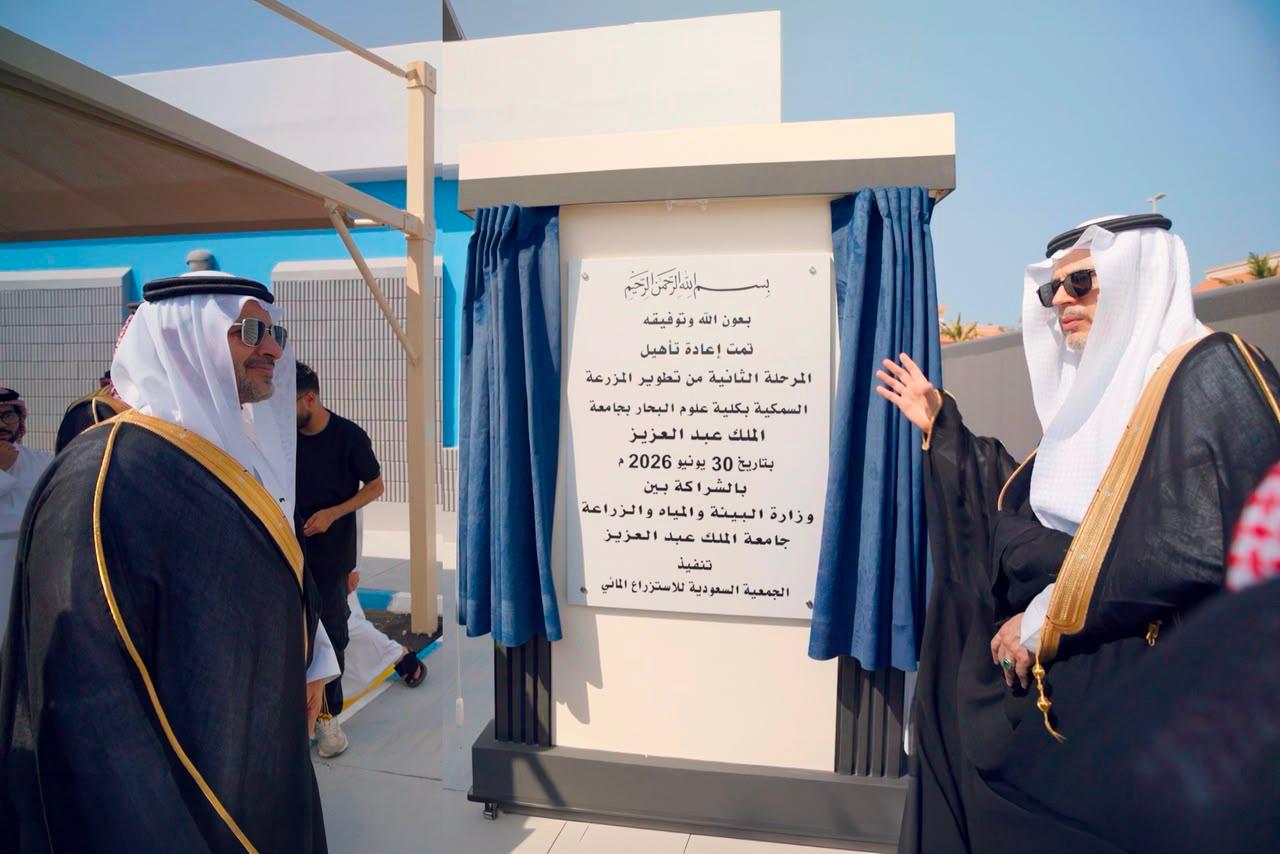
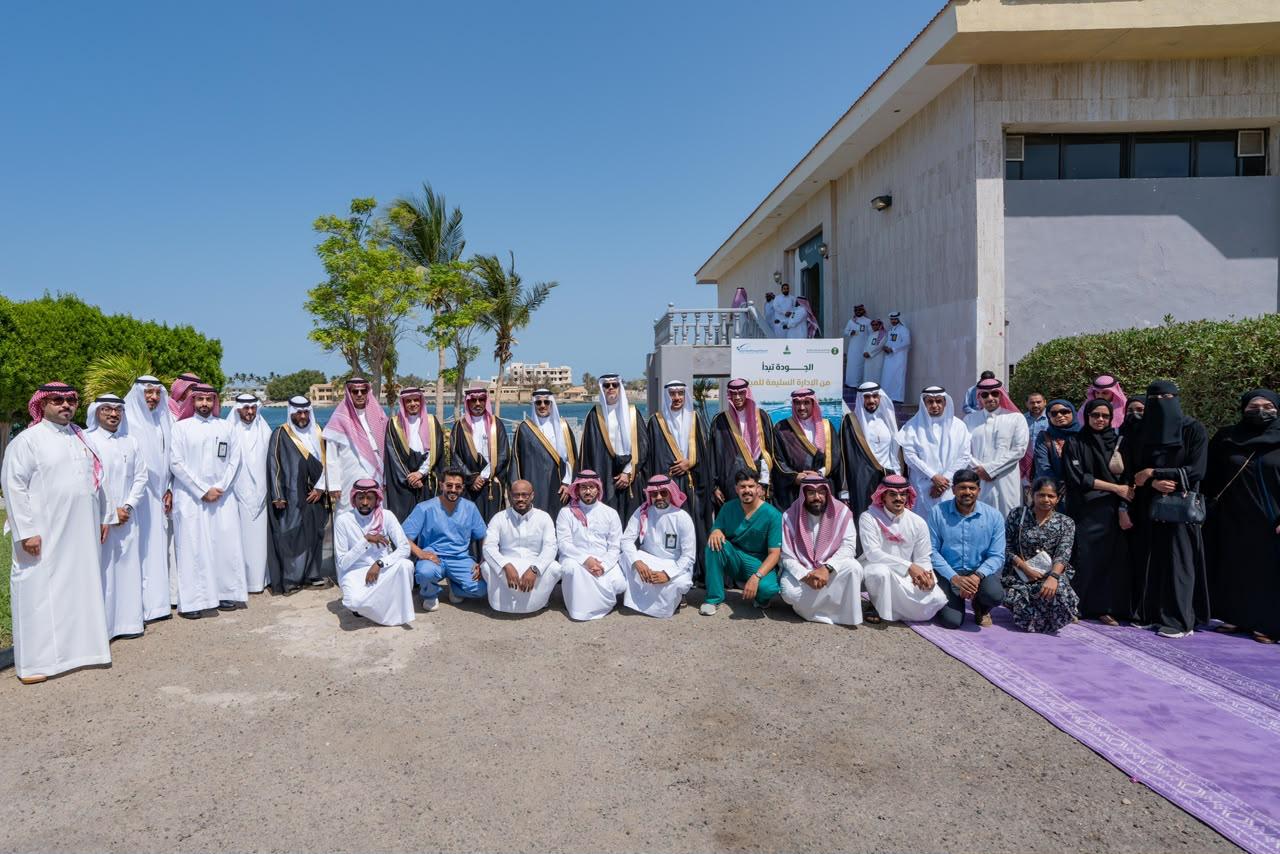
The Ministry of Environment, Water and Agriculture and King Abdulaziz University, in cooperation with the Saudi Aquaculture Society, inaugurated the second phase of the fish farm development project at the Faculty of Marine Sciences at King Abdulaziz University, under the patronage of His Excellency the Deputy Minister of Environment, Water and Agriculture, Engineer Mansour Al-Mashiti. The inauguration was attended by His Excellency the University President, the Deputy Minister for Agriculture, the Assistant Deputy Minister, Dr. Ali Al-Shaikhi, and a number of officials, academics, and specialists in the aquaculture sector
The project is part of the strategic partnership between the Ministry of Environment, Water and Agriculture and King Abdulaziz University, aimed at developing the fish farm into a national center for research and development, technology transfer, and national capacity building. This contributes to supporting the goals of the Kingdom's Vision 2030, enhancing food security, and raising the efficiency of the aquaculture sector
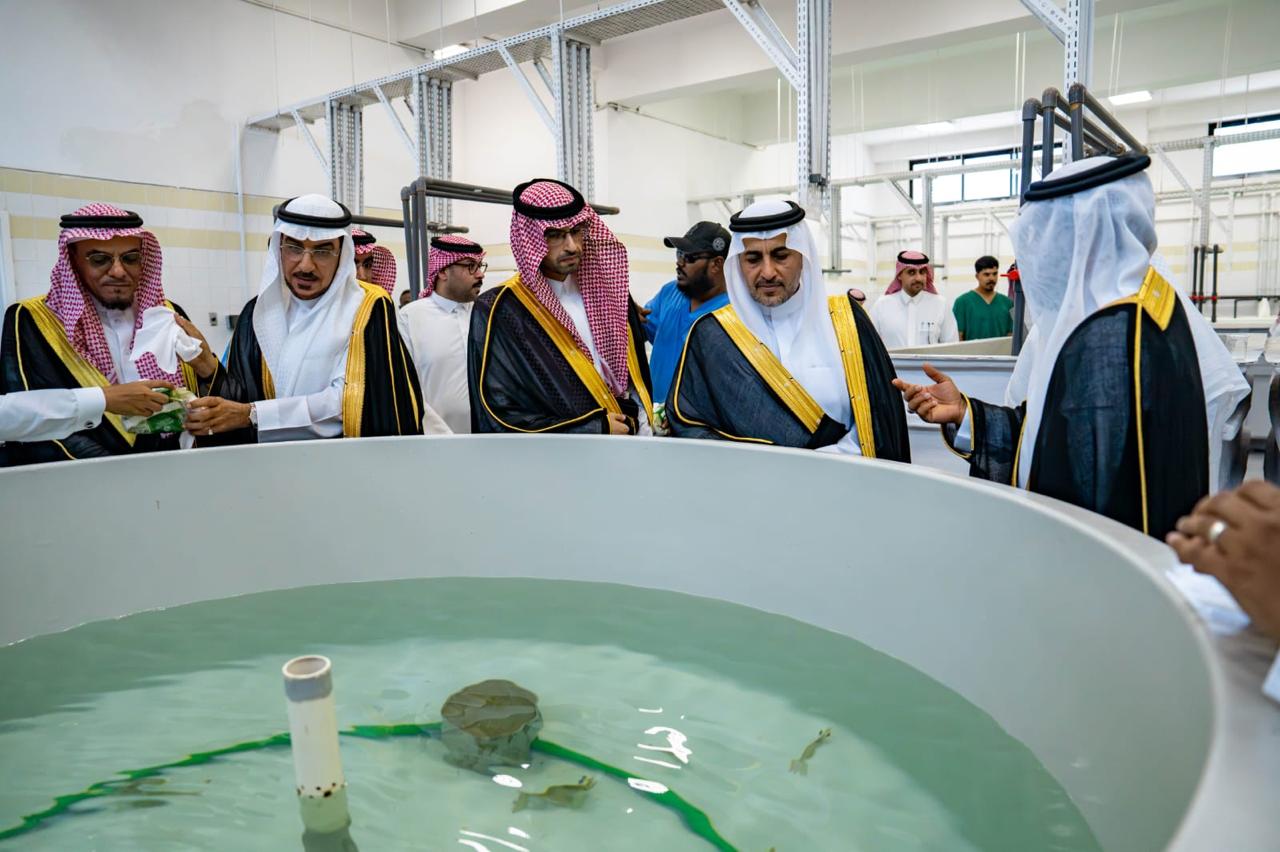
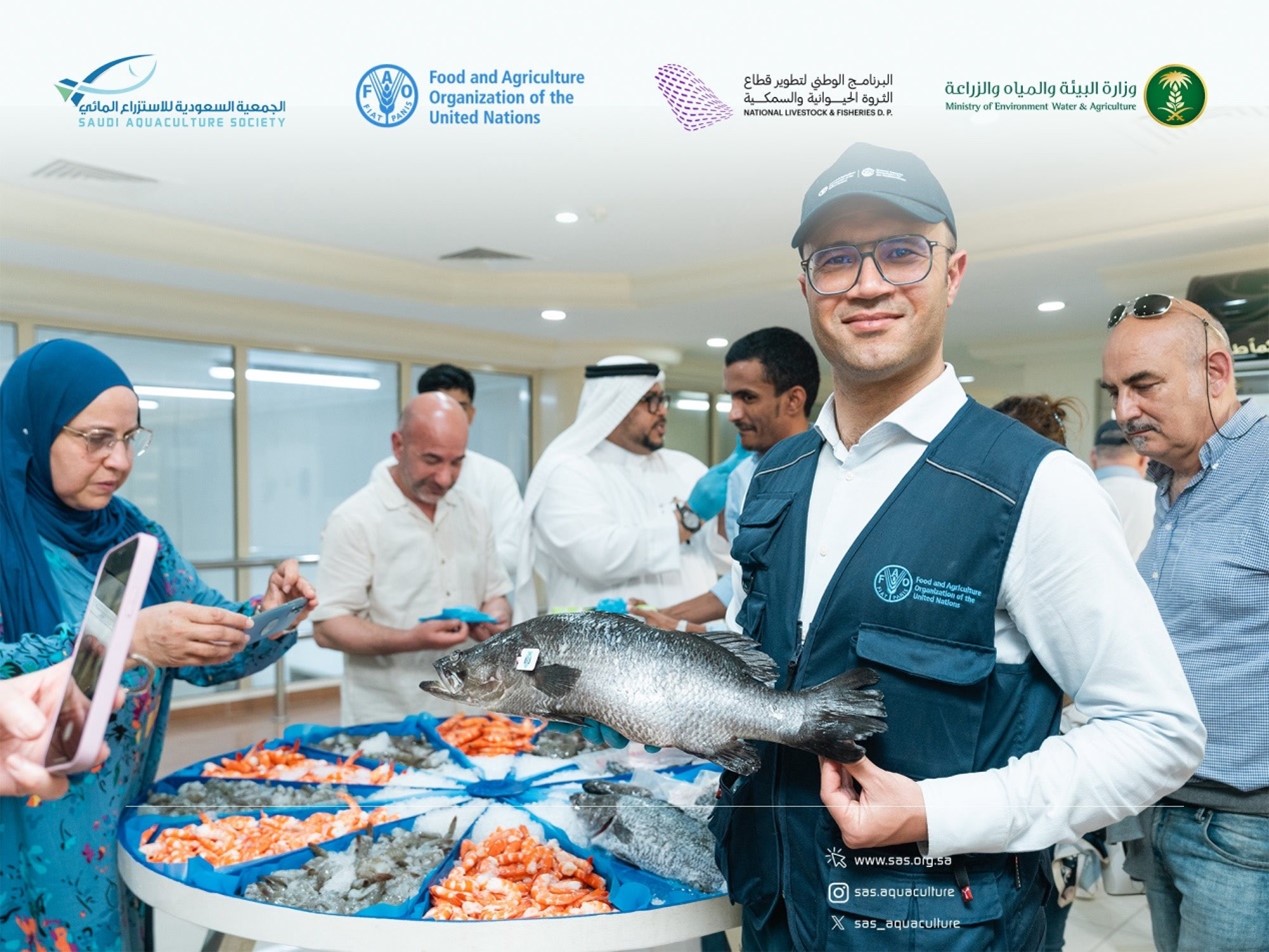
The second phase included the implementation of comprehensive development works for the infrastructure, operational facilities, and research facilities. This encompassed upgrading water pumping and treatment systems, rehabilitating ponds, developing hatchery and production facilities, and establishing specialized research units, thus providing an advanced environment for applied research, training, and knowledge transfer. The farm also includes research and production programs for developing and cultivating several high-value economic species, including sea cucumber, red tilapia, marine tilapia, and giant shrimp (Monodon), in addition to implementing breed improvement programs, enhancing biosecurity, and developing aquaculture technologies to support the sector's sustainability
The farm contributes to developing national talent by training students from King Abdulaziz University, supporting graduate studies and applied research projects, and linking scientific research outputs to the needs of the aquaculture sector, thereby fostering innovation and increasing production efficiency
This project exemplifies the integration of the government, academic, and non-profit sectors, reflecting the trend towards utilizing scientific research and innovation to develop the aquaculture sector and enhance its contribution to achieving food security and sustainable development in the Kingdom


 By Saudi Aquaculture Society, on 02 July 2026



.jpeg)